
Let him file his own nails.
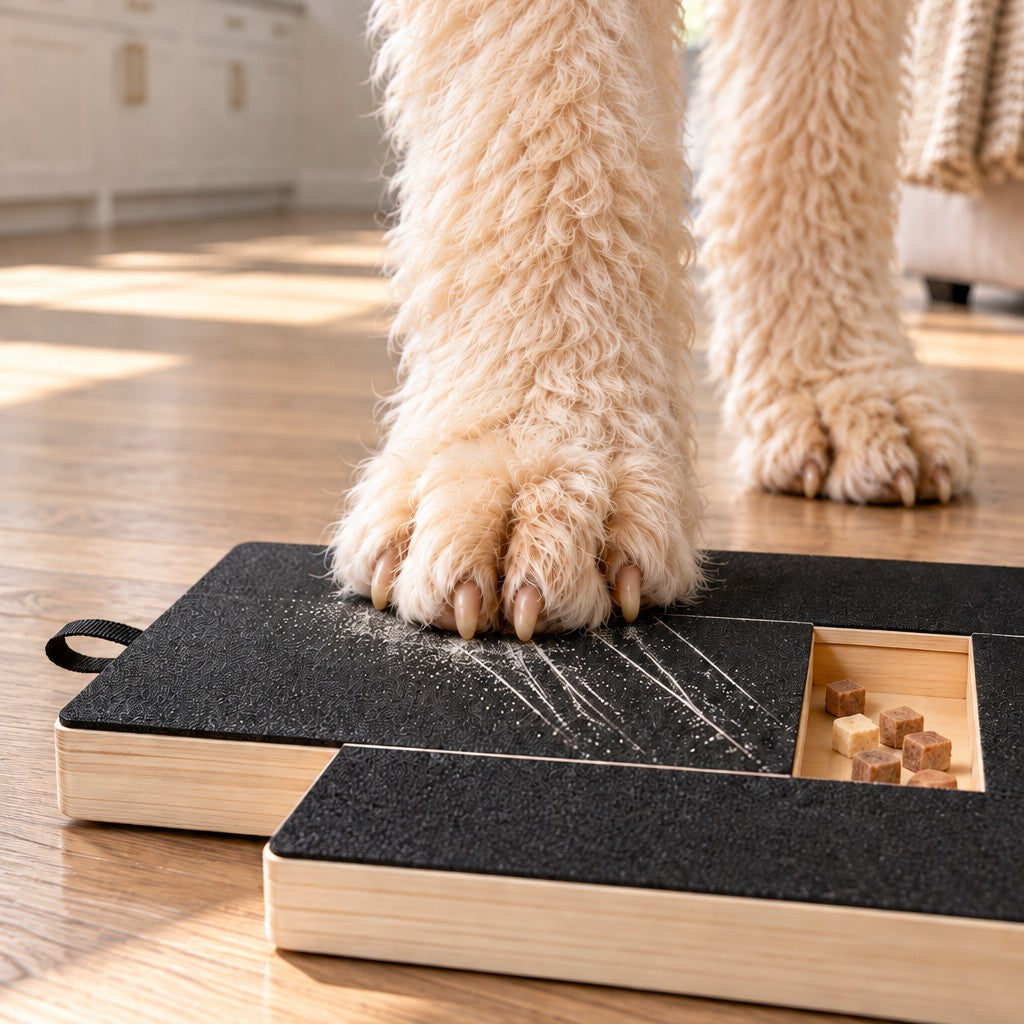
Nail Scratch Board
You're on the list.
Our apologies for the wait. We'll email your 20% off code the day it's back in stock.
How it works
-
 Hide a treat in the tray
-
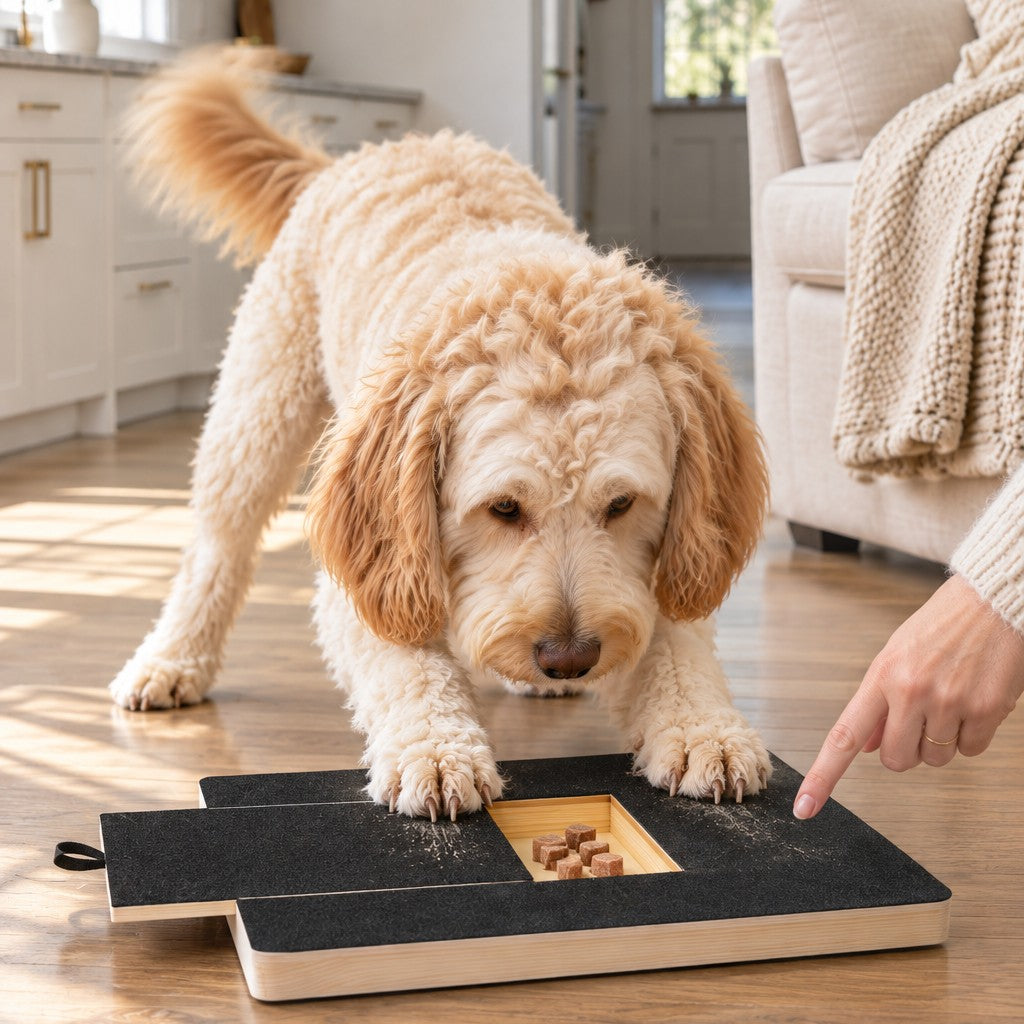
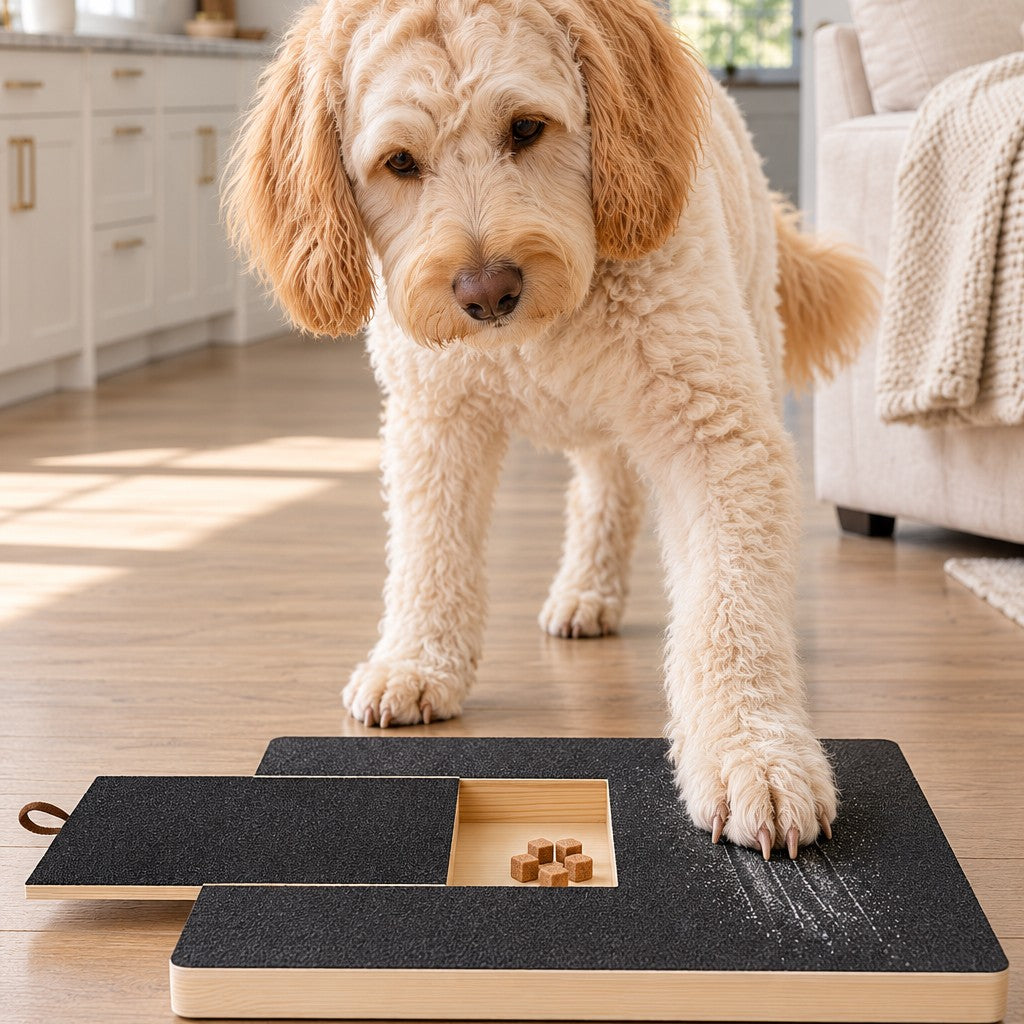
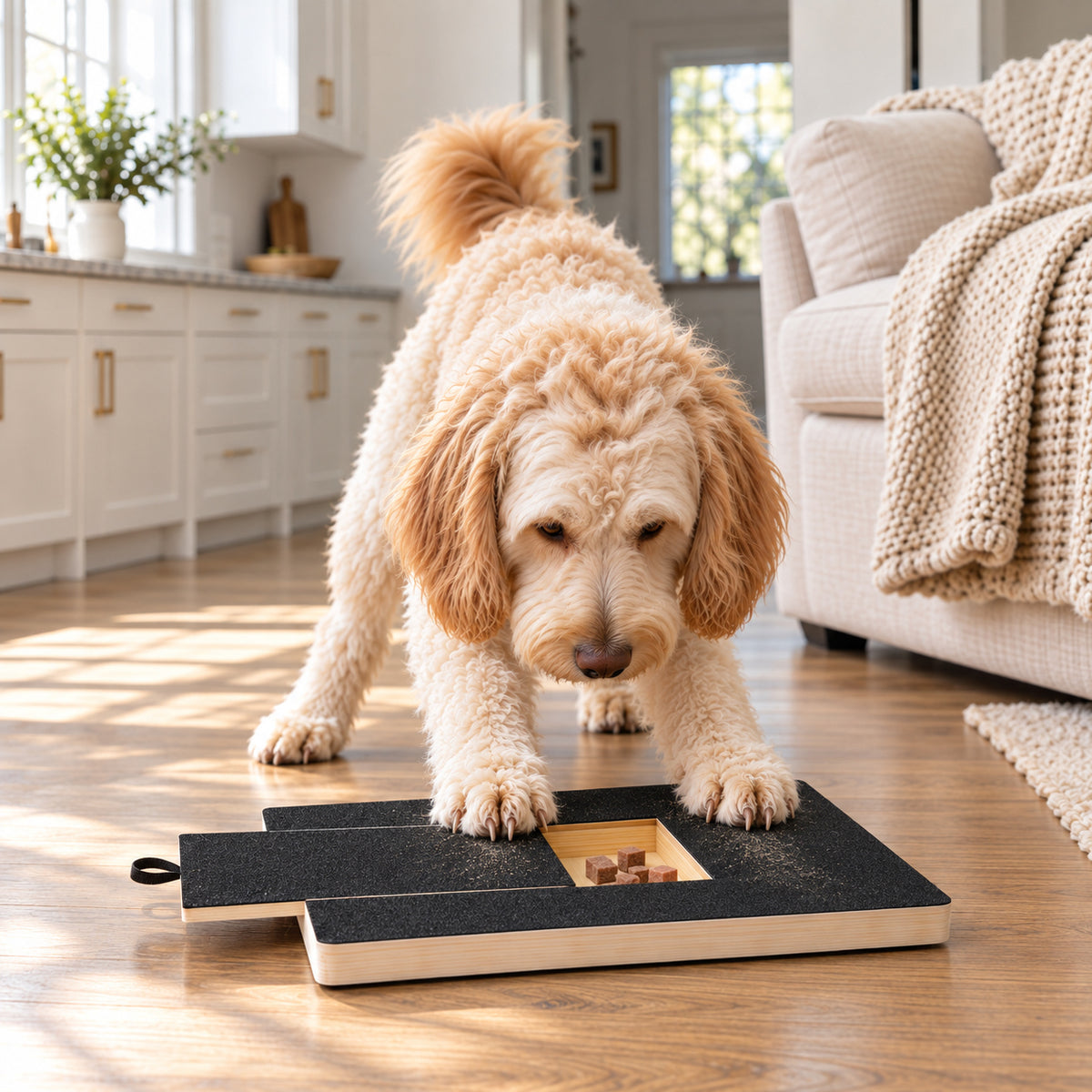
 He scratches to get it
-
 Nails file down. No clippers.


What to expect
- Day 1: Treat in the tray
- Day 3: Paw on the board
- Day 7: Scratches on his own
- Day 30: Shorter front nails
- Day 1 · Meet itLay the board flat and put a treat on the sandpaper, five times. Then one in the open tray. No scratching yet.
- Day 2 · Paw = treatScratch the sandpaper with your fingers. The instant he paws it, say "scratch" and hand him a treat.
- Day 3 · The trayTreat in the tray, lid closed. After two or three swipes, slide it open for him.
- After thatTwo or three one-minute sessions a day. Wait for a few more swipes each time.
Product details
He scratches for a treat. His front nails file down.
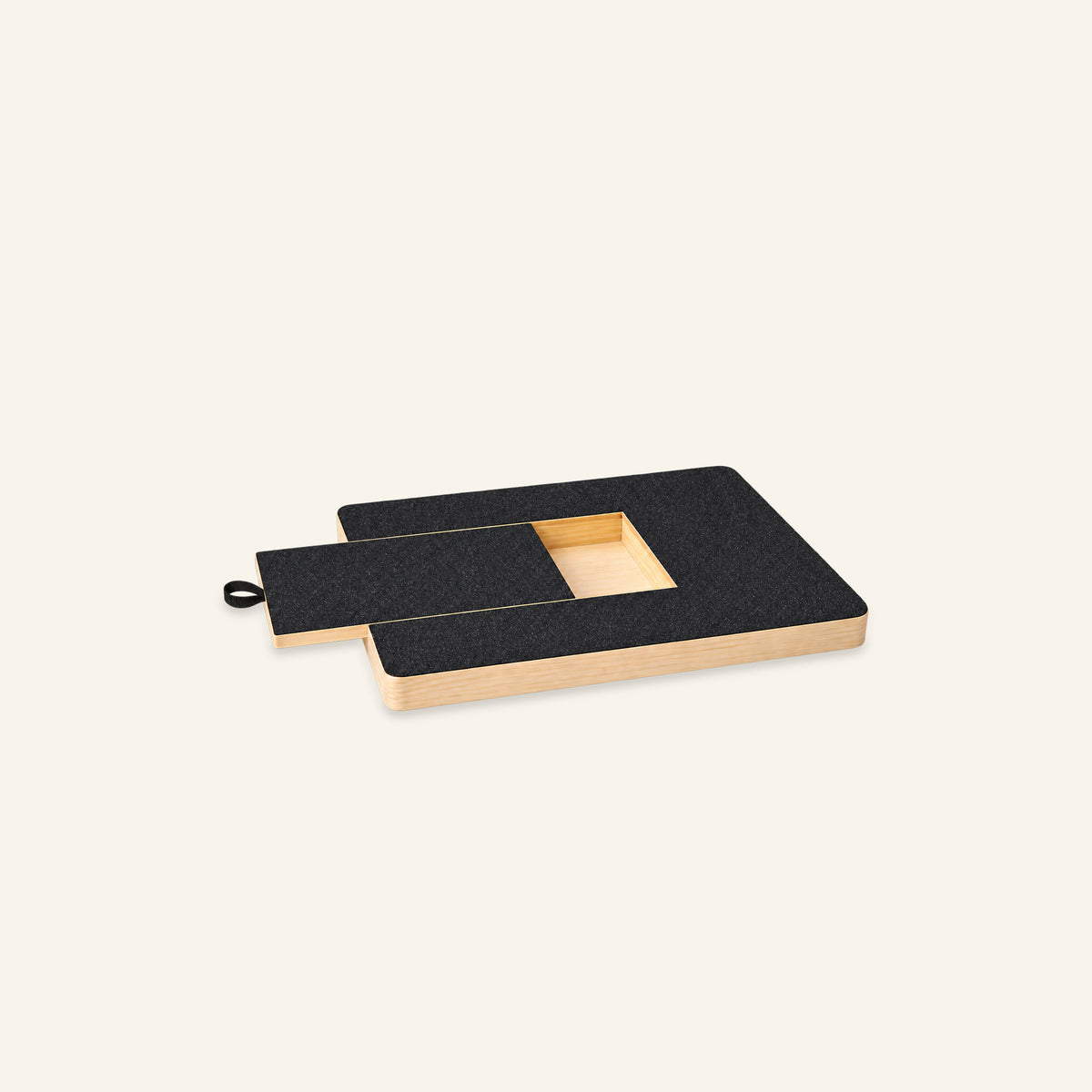
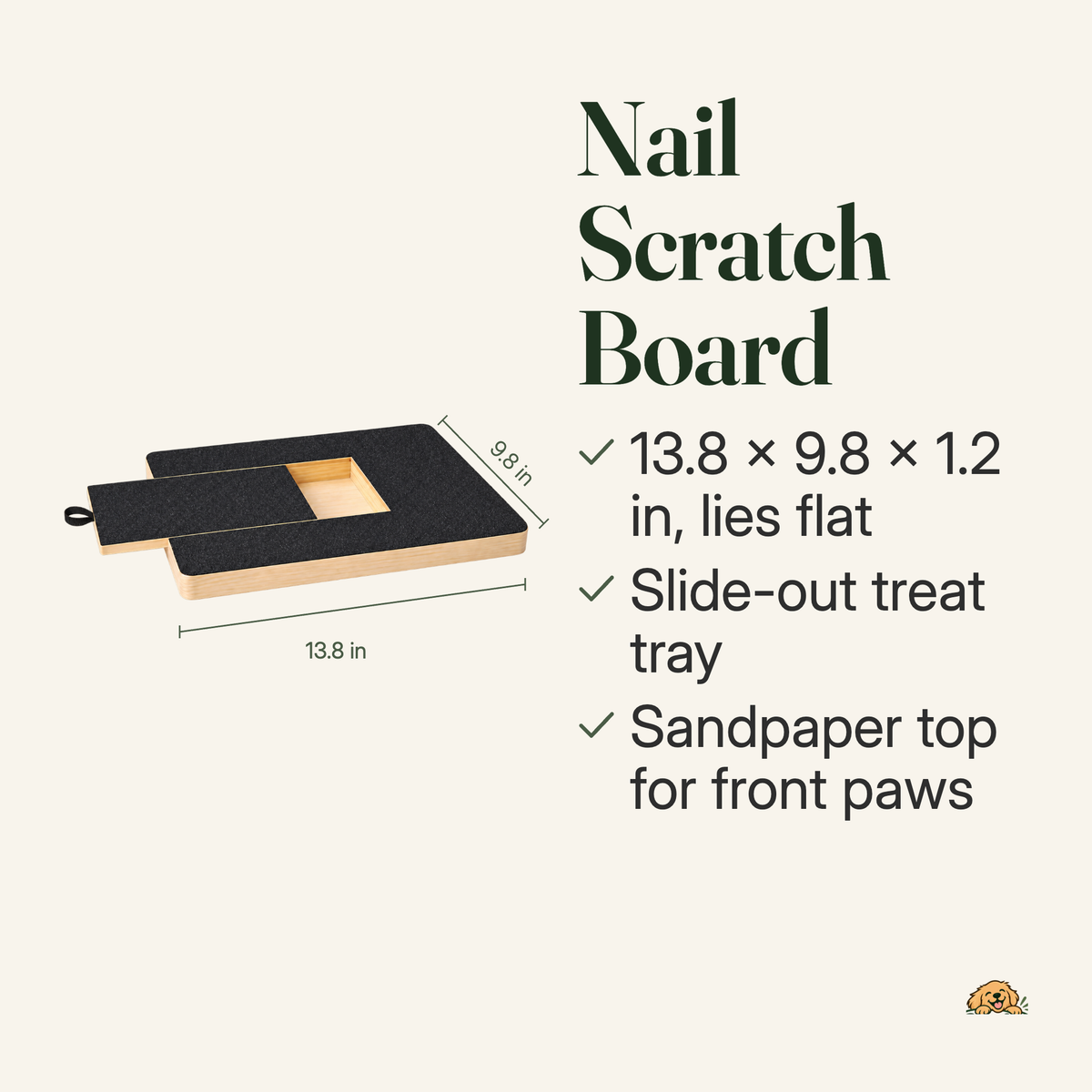
Solid wood base, sandpaper top, hidden treat tray.
Put a treat in the hidden tray. He scratches the sandpaper to get to it, you slide the tray open as his reward, and every swipe takes a little off.
A flat 13.8 × 9.8 in board with a solid wood base. No stand, hinge or easel.
Front paws only. Back nails still need the occasional trim.
What's inside
- Base: solid wood
- Top: sandpaper filing surface
- Tray: shallow wooden tray under a slide-out, sandpaper-topped lid
- Pull loop: fabric
Specs
- Size: 13.8 × 9.8 × 1.2 in (35 × 25 × 3 cm)
- Treat tray: slide-out, about 1 in deep
- Top: sandpaper filing surface
- Base: solid wood, lies flat
- Use: front paws
- Care: brush off nail dust, wipe out the tray, don't soak
Best for
Made for dogs who'd do anything for a treat.
Not food-motivated? Try a higher-value treat or his favorite toy as the reward.
Questions
- Is it just for front paws?
- Yes, honestly. Front paws do the digging, so the front nails file; back nails still need a trim every few weeks.
- One nail on each paw didn't get shorter. Why?
- The inner nail, or the dewclaw if he has one, often doesn't touch the board. Trim those as needed.
- Will it work for my bigger dog?
- At 13.8 × 9.8 in, there's room for both front paws on most dogs. For big diggers, set it on a rug or against a wall so it doesn't slide.
- Will it hold up?
- It's a solid wood board with no hinge, easel or stand to break. If it arrives damaged, our guarantee covers it.
- How do I teach him the treat tray?
- Start by handing him a treat each time he paws the board, then move the treat into the tray and slide it open after a few swipes. Most dogs catch on in a few short sessions; some take a week.
- What if he isn't food-motivated?
- Try a higher-value treat, like a bit of cheese or chicken, or his favorite toy as the reward. Keep sessions short and fun.
- Will it hurt his paw pads?
- Dogs usually flex their nails outward when they scrape, so the pads stay clear. Check his pads now and then, and keep early sessions short.
- How often should he use it?
- Two or three one-minute sessions a day work better than one long one. Stop while he still wants more.
Why we say this
How a scratch board works
A scratch board lets your dog file his own nails: "Your dog does most of the work himself! No clippers involved." Dogs usually flex their nails outward when scraping, so their pads stay protected (Fear Free Happy Homes).
It works best on front paws. Back nails still need an occasional trim.
Be one of the first to review.